

Email Marketing for Retail Businesses: Build Customer Loyalty and Drive Repeat Sales
Email marketing remains a valuable way for retail businesses to connect with customers, promote products, and encourage repeat purchases. Whether a store sells clothing, beauty products, groceries, jewelry, or home essentials, a well-planned email marketing strategy can help maintain customer relationships beyond the initial purchase.
However, managing promotions, customer lists, seasonal offers, and follow-up messages can become complicated when businesses rely on multiple disconnected tools. An organized email marketing approach helps retailers communicate consistently while making better use of their marketing resources.
Why Email Marketing Matters for Retail Businesses
Retail customers often have different shopping preferences, interests, and purchase habits. Sending the same promotional message to every subscriber may not always deliver the most relevant experience.
Email marketing allows retailers to share targeted communications based on customer interests, shopping activity, and campaign objectives. For example, a clothing store can announce a new collection, a beauty retailer can introduce seasonal products, and a neighborhood grocery store can promote weekly specials.
Regular newsletters and promotional emails also help businesses keep customers informed about product launches, exclusive offers, loyalty programs, and upcoming events. With relevant messaging and consistent communication, retailers can encourage customers to revisit their stores or online shops.
Common Email Marketing Challenges in Retail
Retail businesses frequently manage several marketing activities at once. Creating attractive emails, maintaining contact lists, scheduling campaigns, and measuring results can take considerable time.
Another challenge is keeping marketing messages relevant. Customers who regularly purchase skincare products may not respond to promotions for unrelated product categories. Similarly, an online shopper who recently purchased a product may be more interested in complementary items than a general store-wide discount.
Measuring campaign performance is equally important. Without clear reporting, retailers may struggle to understand which messages generate clicks, which promotions attract interest, and where improvements are needed.
A practical email marketing solution should make campaign creation easier, support relevant audience targeting, and provide useful performance insights.
Five Email Marketing Strategies for Retailers
1. Send Personalized Product Recommendations
Personalization helps retailers make email communication more relevant. Instead of sending identical messages to every subscriber, businesses can organize audiences according to available customer preferences and relevant data.
For example, a sports equipment retailer might send running accessories to customers interested in fitness products. A bookstore could highlight new releases in genres that subscribers prefer.
Relevant recommendations can help customers discover suitable products while giving retailers opportunities to promote complementary purchases.
2. Create Seasonal Promotional Campaigns
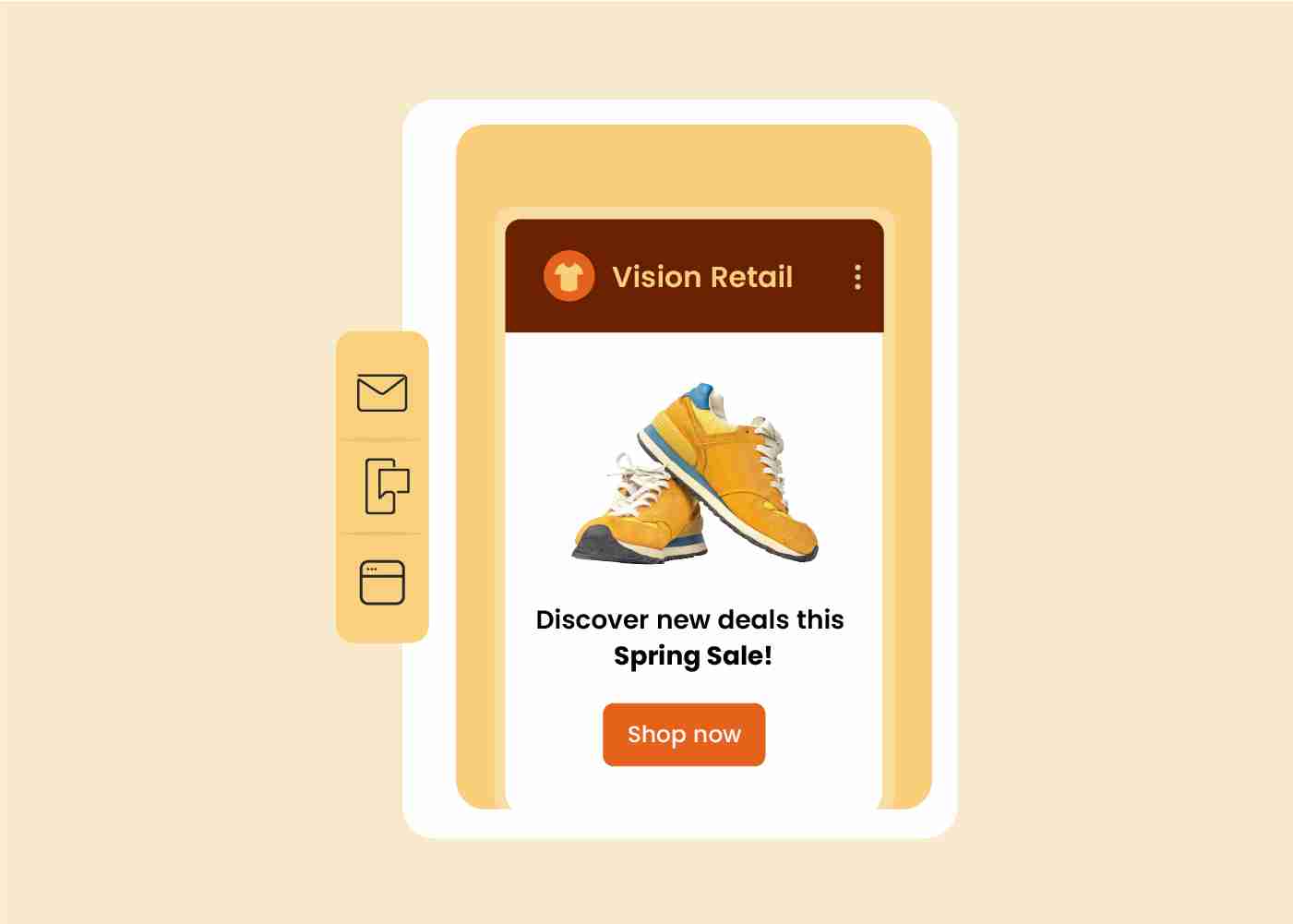
Seasonal campaigns give retailers opportunities to connect with customers around holidays, festivals, clearance events, and new product launches.
A clothing boutique might promote a festive collection, while a gift shop could share curated gift ideas before special occasions. Grocery stores can use email newsletters to communicate seasonal products and limited-time offers.
Planning these campaigns in advance helps businesses maintain a consistent promotional calendar. Using clear subject lines, engaging visuals, and relevant calls to action can also make emails easier for customers to navigate.
3. Automate Welcome and Follow-Up Emails
Welcome emails introduce new subscribers to a retail brand and help establish expectations for future communication. Retailers can use these messages to explain their product range, highlight popular categories, or share information about loyalty benefits.
Automated follow-up journeys can extend this communication. For instance, a customer who clicks a product announcement may receive a relevant follow-up message, while someone who does not engage may receive a different communication at an appropriate time.
Marketing Star supports automated email journeys that can respond to recipient engagement, helping retailers organize follow-ups without manually managing every message.
4. Encourage Repeat Purchases
Customer retention is an important part of retail marketing. Email campaigns can remind customers about replenishable products, showcase complementary items, or introduce new arrivals that match their interests.
A pet supplies store, for example, might send timely reminders about regularly purchased essentials. A cosmetics retailer could announce related products or share information about a newly launched collection.
These campaigns should be relevant and appropriately timed rather than relying on frequent, generic promotional messages.
5. Measure Campaign Performance
Retailers need to understand how customers interact with their emails to improve future campaigns. Tracking available metrics, such as clicks, engagement, and conversions, can help identify which content and offers deserve further attention.
Marketing Star provides email campaign analytics and pre-send checks, including spam score analysis, link verification, and audience list quality checks. These tools help marketers review important campaign details before sending and evaluate performance afterward.
Regular analysis also creates opportunities to test different subject lines, email content, and sending schedules.
Simplify Retail Email Marketing with Marketing Star
Managing retail email campaigns becomes more straightforward when essential marketing tools are available in one place. Marketing Star offers an email marketing platform with a drag-and-drop template builder, audience management, automation workflows, responsive email design, and campaign analytics.
Retailers can create newsletters, announce promotions, design product-focused emails, and build automated customer journeys without requiring coding expertise. Its pre-send checks help identify potential content and audience issues before campaigns launch.
Marketing Star also brings email together with other channels, including SMS, WhatsApp, QR code campaigns, web forms, and Instagram marketing. This gives retailers options for coordinating customer communication across different touchpoints from a unified platform.
Conclusion
Email marketing offers retail businesses a practical way to promote products, strengthen customer relationships, and encourage repeat purchases. By combining relevant content, thoughtful automation, seasonal promotions, and performance tracking, retailers can develop more organized and customer-focused campaigns.
With tools for email creation, automation, audience management, and analytics, Marketing Star helps simplify campaign management. Retail businesses can use these capabilities to build consistent communication strategies and create more connected customer experiences.